Service Dogs: What They Are and How They Help People
These special dogs guide, listen and warn — and they train for about two years
Some dogs have a job. They are called service dogs. A service dog helps one person with a disability. The dog and the person are a team.
Guide dogs help people who cannot see. The dog walks in front of the person. It stops at roads and steps. It walks around holes and cars. So the person can walk safely through town.
Hearing dogs help people who cannot hear. The dog listens for the doorbell or an alarm. Then it runs to its owner and touches them. The owner knows: something is happening.
Some service dogs can smell sickness. A dog's nose is thousands of times better than ours. The dog warns its owner early. Then the owner can take medicine and rest.
Service dogs also help with hands. They open doors. They pick up keys and phones. They press buttons. They carry small bags.
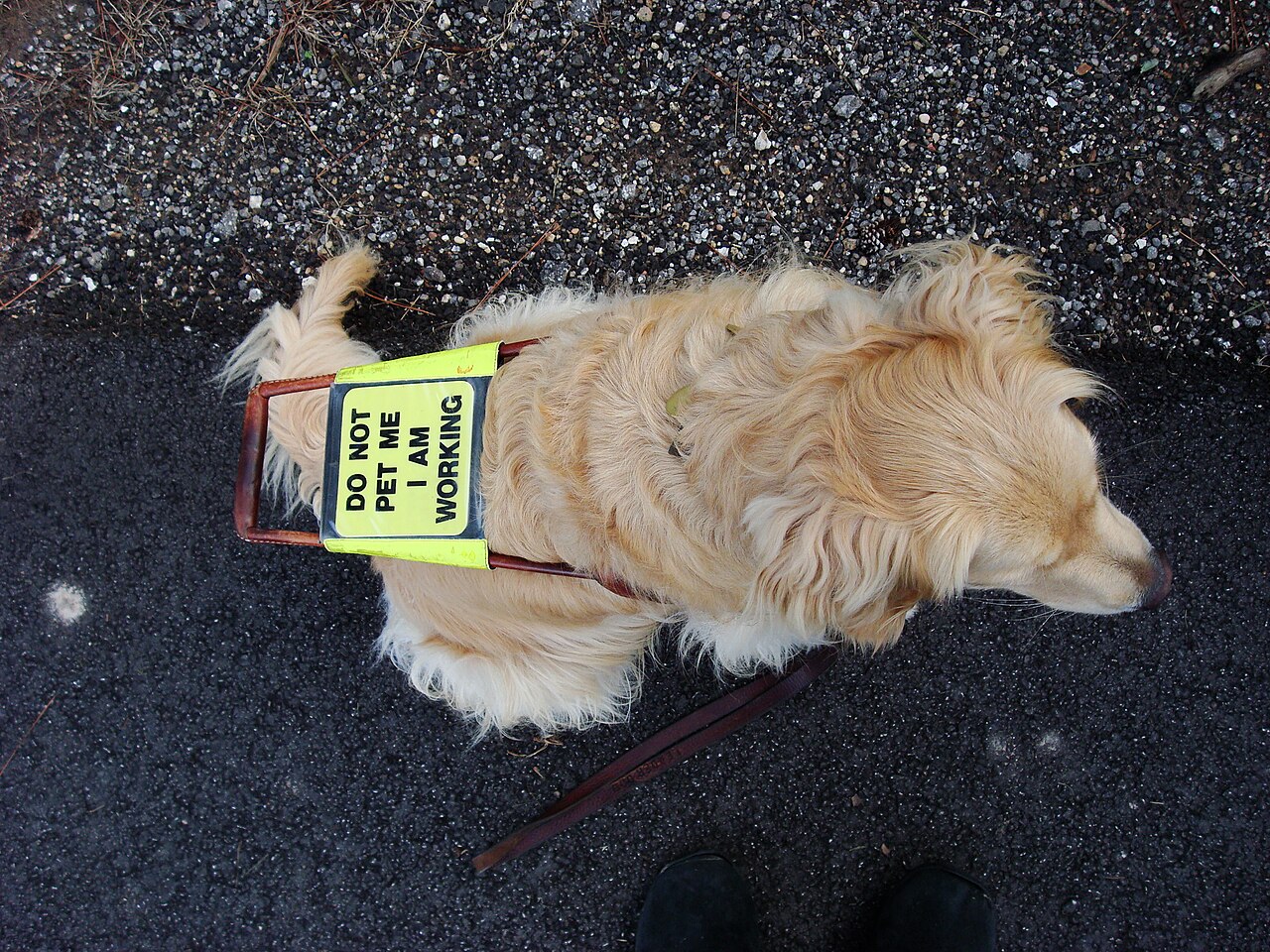
A service dog learns its job for about two years. Many are Labradors or golden retrievers. At work the dog wears a special vest. The vest says: I am working.
Service dogs can go to many places. They can go in shops, restaurants and planes. Please do not pet a working dog. It must think about its job.
Understood everything? Read this story at A2.
Service Dogs: The Four-Legged Helpers Trained to Change Lives
Guide dogs, hearing dogs and medical alert dogs train for about two years to become one person's daily helper
A service dog, also called an assistance dog, is trained to help one person with a disability. The dog lives with its owner and helps them every day, so the two become a real team. Many service dogs are Labradors or golden retrievers, because these dogs are calm, friendly and love to learn.
The most famous service dogs are guide dogs, which help people who cannot see. A guide dog walks in front of its owner in a special harness. It stops at roads and steps, walks around holes and parked cars, and finds doors and crossings. With a guide dog, the owner can move safely through a busy town.
Hearing dogs help people who cannot hear. When the doorbell rings or an alarm sounds, the dog runs to its owner and touches them with its nose or paw. Then it leads the owner to the sound.
Other service dogs use their amazing noses. A dog can smell thousands of times better than a person, so some dogs learn to smell when their owner is getting sick. They warn the owner early, and the owner can take medicine and find a safe place to rest.
Service dogs also work as an extra pair of hands: they open doors, press buttons, and pick up keys, phones and dropped things. Because their help is so important, service dogs are allowed in many places where pets cannot go, like shops, restaurants and planes.
Training a service dog takes about two years and costs a lot of money, so many dogs are trained by charities. A working dog wears a special vest. When you see one, do not pet it or call it — the dog is working, and its owner needs it to pay attention.
Understood everything? Read this story at B1.
What Service Dogs Are, Why They Matter and What They Can Do
Trained for about two years, these dogs guide people who cannot see, alert owners who cannot hear, and can even smell an illness coming
A service dog — known in many countries as an assistance dog — is a dog that has been specially trained to support one person with a disability. Unlike a pet, a service dog has a job: it lives and travels with its owner and helps them do everyday things that would otherwise be difficult or dangerous. The bond between dog and owner is so close that trainers describe them as a working team.
The best-known service dogs are guide dogs for people who cannot see. Walking ahead of the owner in a stiff harness, a guide dog stops at kerbs and stairs, steers around obstacles and finds doors and crossings. The first schools for guide dogs opened in Germany in the 1920s, and today guide dog organisations work in dozens of countries around the world.
Hearing dogs do a similar job for people who cannot hear. When the doorbell rings, a fire alarm sounds or someone calls the owner's name, the dog makes contact with its nose or paw and leads the owner to the sound. At home, that means small daily tasks become easier; outside, it can prevent serious accidents.
Some of the most surprising service dogs work with their noses. A dog's sense of smell is thousands of times more sensitive than a human's, and dogs can be trained to recognise the tiny changes in body smell that come before certain medical problems. A medical alert dog can warn its owner minutes before trouble starts, giving them time to take medicine, sit down or call for help.
Other service dogs act as an extra pair of hands for people who use wheelchairs or have difficulty moving: they open and close doors, press buttons, pull off socks, fetch the phone and pick up anything their owner drops. Because this support is essential, the law in many countries allows service dogs into shops, restaurants, offices and planes — places where ordinary pets are not welcome.
Becoming a service dog is hard work. Training usually takes about two years, from puppy lessons to advanced skills, and preparing one dog can cost tens of thousands of dollars, which is why many are raised and trained by charities. Labradors, golden retrievers and German shepherds are the most common choices because they are calm, clever and eager to please. Not every dog passes: only the most patient and confident finish the course.
There is one simple rule for everyone else. A service dog in its vest or harness is at work, so do not pet it, feed it or call it, however friendly it looks. Let the dog concentrate — someone's safety depends on it.
Too difficult? Read this story at A2 or at A1.